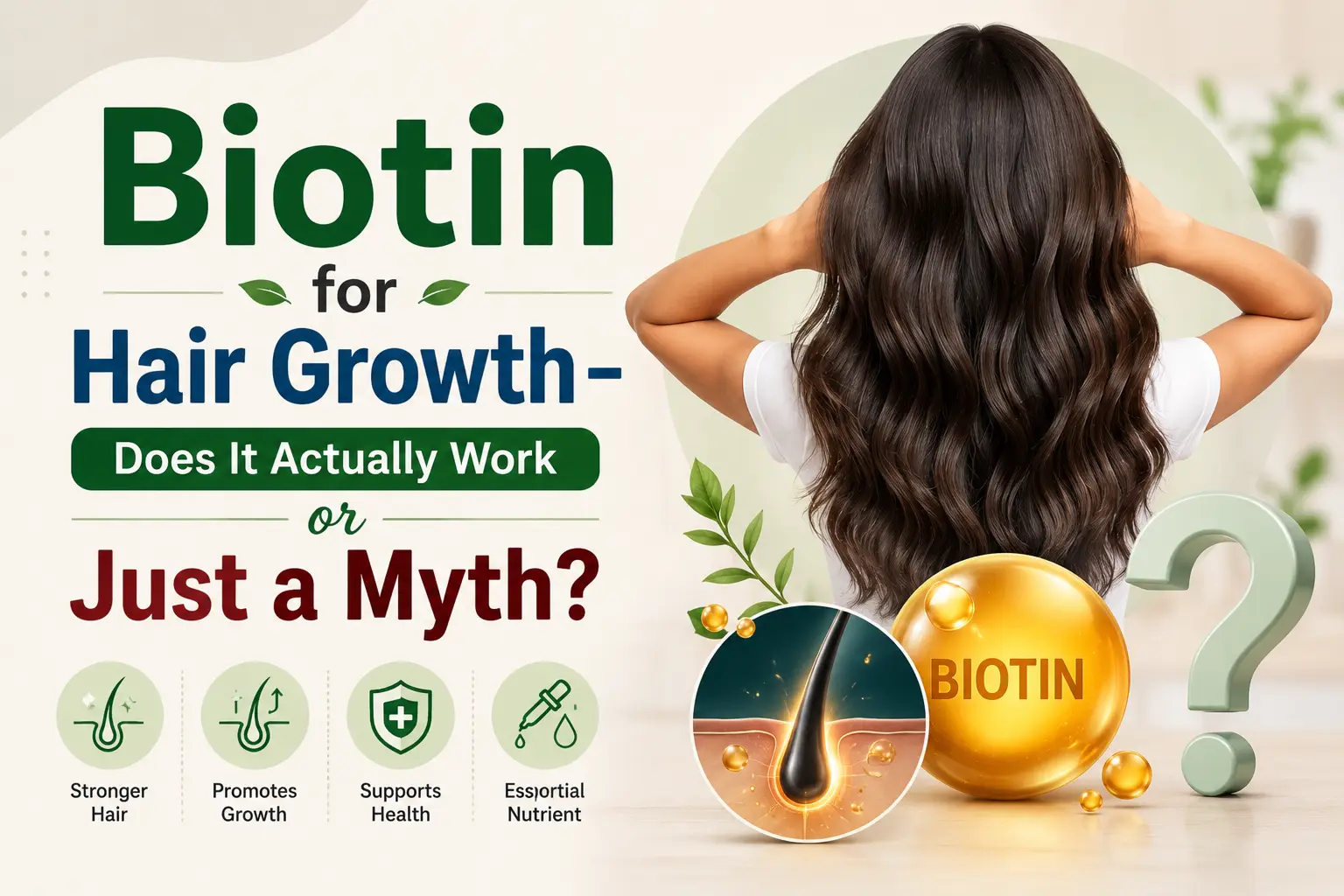
Hair fall has become a common concern, whether it is due to stress, poor diet, or lifestyle changes. In the middle of all the advice and products available, one name comes up again and again: biotin.
It is often marketed as a simple solution for stronger, thicker hair. But the real question is, does biotin for hair growth actually work, or is it just another trend people follow without understanding? The answer is not as straightforward as it seems. Biotin can help in certain situations, but it is not a universal solution for every type of hair fall.
Biotin, also known as vitamin B7, is a water-soluble vitamin that plays a role in converting food into energy. It also supports the production of keratin, which is a key protein that makes up hair, skin, and nails.
Because of this connection with keratin, biotin is often associated with improved hair strength and growth. When the body has enough biotin, hair structure tends to remain healthier and less prone to breakage. However, this does not automatically mean that taking extra biotin will lead to faster hair growth in every case.

Biotin is effective, but only under specific conditions.
If someone has a biotin deficiency, then supplementation can improve hair health, reduce breakage, and support normal growth. In such cases, the results can be noticeable over time.
However, if biotin levels in the body are already normal, taking additional biotin may not produce significant changes. This is where confusion begins, as many people expect dramatic results regardless of their actual deficiency status. In simple terms, biotin supports healthy hair growth – but it is not a guaranteed solution for hair loss caused by other factors.
Hair fall is rarely caused by a single reason. In many cases, it is linked to multiple factors that go beyond vitamin deficiency.
These include stress, hormonal imbalance, poor nutrition, and lifestyle habits. Conditions such as thyroid issues or anemia can also contribute to hair loss. In such situations, relying only on biotin may not solve the problem. Addressing the root cause becomes more important than simply adding a supplement.
Biotin deficiency is not very common, but when it occurs, it can affect hair, skin, and nails.
Some signs that may indicate low biotin levels include:
If these symptoms appear together, especially with ongoing hair issues, biotin deficiency may be a contributing factor.
Hair growth depends on overall nutrition and internal health, not just one vitamin.
Condition | What Helps Most |
Biotin deficiency | Biotin supplementation |
Nutritional gaps | Multivitamins + balanced diet |
Stress-related hair fall | Stress management + lifestyle changes |
Hormonal issues | Medical evaluation + targeted treatment |
This shows that biotin can be part of the solution, but not the entire solution.
Biotin supplements in Pakistan are widely available and are often included in hair, skin, and nail formulas. For individuals with dietary gaps or confirmed deficiency, these supplements can help support hair strength and reduce breakage.
However, expecting rapid or dramatic hair growth from biotin alone can lead to disappointment. Results are usually gradual and depend on consistency and overall health. Choosing the right supplement and using it regularly is more important than switching between multiple products.

Improving hair health requires a broader approach.
Maintaining a balanced diet with adequate protein, vitamins, and minerals is essential. Managing stress, improving sleep quality, and avoiding excessive heat or chemical treatments can also make a difference. Biotin can support this process, but it works best when combined with overall healthy habits.
Biotin is not a myth, but it is also not a miracle solution. It plays an important role in maintaining healthy hair, especially in cases where there is a deficiency.
For individuals experiencing hair fall, the key is to understand the underlying cause. In some cases, biotin supplementation can help, while in others, a more comprehensive approach is required. Focusing on overall nutrition and consistency will always provide better results than relying on a single supplement.
It helps if there is a deficiency, but may not show major results if levels are already normal.
Results may take a few weeks to a few months with consistent use.
It can reduce hair fall caused by deficiency, but not all types of hair loss.
Syrups, if taken as per instructions, are mostly safe. But people with any underlying diseases need expert advice before consumption.
It often works better as part of a balanced supplement rather than alone.